Skip to content
The column “Autopsie” · Le Nouvelliste 54 columns · July 2025 to September 2026

Economics · Institutions · Society

Réginald Surin

Economist and columnist · Port-au-Prince

I write “Autopsie” for Le Nouvelliste, a column that applies the tools of economics to the mechanisms that hold Haitian society together or make it give way: armed violence, money, institutions, inherited inequality. This site gathers the complete archive, in French, along with my research and the progress of a book in preparation, L’Anatomie de la Fracture. A selection of texts is available in English.

Read the texts in English Research, in French

Réginald Surin, Haitian economist and columnist

Latest text · Research ·

Unfolding the Crisis

A Haitian mathematician, Ruben Louis, studies how to open up the points where the ordinary tools of geometry stop working. His results offer the country’s economists a method for reading an economy that standard models can no longer describe, and a reason to make mathematics a matter of public policy.

Read the article
54 columns published
43 full texts online
32 English versions
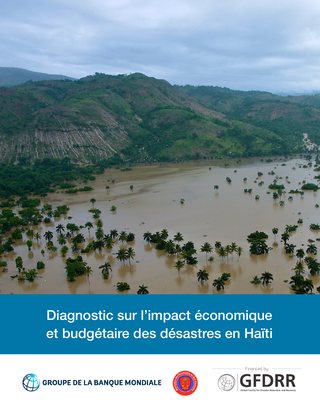
2 World Bank reports

A sentence by Réginald Surin, quoted outside Haiti

“The word ‘elites’ acts as a national distraction, a convenient catharsis that avoids questioning the institutional framework itself. It is neither their origin, nor their wealth, nor their personality that determines their behavior. It is the architecture of incentives that precedes them, shapes them, selects them and, above all, rewards them. Haiti needs institutional engineering.”

Réginald Surin

These are his words. Rogelio Núñez, senior associate researcher at the Real Instituto Elcano and lecturer at the Institute of Latin American Studies of the University of Alcalá, reports them in El Español (Spain) on 27 January 2026. Translated from the Spanish.

Cited and interviewed inLe NouvellisteAlterPresseListín DiarioEl Español

Cited in researchWar Watch, Geneva AcademyHaiti Working Group

Recent texts

All translated texts
  • Society

    Selling Death, Buying a Life

    In 2025, the United Nations verified the recruitment of 892 children by Haitian gangs, nearly three times the previous year’s figure. This column takes seriously a word used in the BINUH report, “promoted,” and shows what the gun really sells a teenager: a place, a name, a showcase open day and night, while honest success is lived behind closed doors.

  • Markets & Labor

    The Silence Surrounding Broken Engines: Why Is No One Being Held Accountable?

    Since mid-September, engines have been breaking down after a fill-up. The column follows the fuel from the tanker to the pump and shows where responsibility dissolves: four links in the chain, four alibis, no sample kept. The state has a laboratory that checks the liters very well and what they contain not at all. Eight measures, only one of which really matters: send the bill back to whoever can prevent the damage.

  • Society

    Who Will We Be After the Gangs?

    A torture video has been circulating for two days, and the woman who ordered it has thousands of followers on TikTok. The column leaves the map of lost territory for one nobody draws: what six years of violence have planted in people’s minds, the children who now make up 30 to 50% of gang members, and the second war that will begin the day the first one is won.

  • Security

    Winning the Streets but Losing the War: Haiti’s Tactical Trap

    Between December and June, the state entered Bel-Air, downtown, Martissant, and Village de Dieu. In August, Kenscoff counted forty-seven dead. The column rereads six months of operations with a single question: who holds the ground the next day. It isolates three bottlenecks, sets them against Colombia, Rio, and Mosul, and proposes five decisions, none of which requires one more armored vehicle.

  • Science & Models

    Haiti and the Next Major Earthquake: The Cost We Can Already Measure

    The next major earthquake in Haiti cannot be predicted. What can already be done is to put bounds on its economic cost, compare that cost with the country’s means, and measure what would be available to finance the first weeks of reconstruction.

  • Security

    They Asked for Peace on a Thursday. On Sunday, Kenscoff Was Burning

    A letter calls for a truce in the name of “rebels.” Three days later, Kenscoff is attacked: forty-seven dead, more than fifty people abducted, then a video threatening to execute them. These acts contradict one another only if they are taken separately. This column reads them as parts of a single negotiation by coercion, and examines what the state can do about the hostages with less than four months to go before the election.

Book in preparation

L’Anatomie de la Fracture

Why do Haiti’s crises keep recurring despite changes of government, international interventions, and announced reforms? The book takes up the material of the columns and turns it into a continuous argument.

Follow its progress

L’Anatomie de la Fracture

A book in preparation. An occasional letter to follow its progress and be told when it comes out.

Get notified by email

Your message opens your email program. Your address is used for this alone and stored nowhere else.